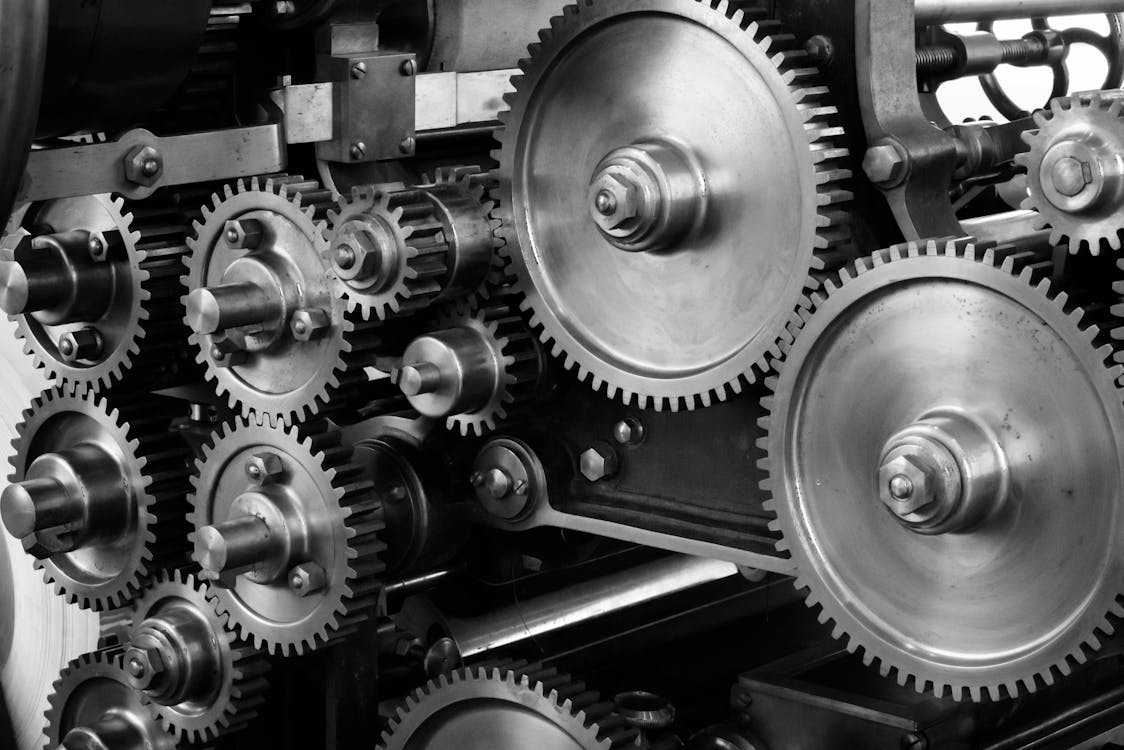
"Technology shapes society, and society shapes technology."
- Robert Winthrop White
"Technology shapes society, and society shapes technology."
- Robert Winthrop White
Industrialization is the process in which a society shifts from being mainly agricultural to being centered around industry and manufacturing. This change involves significant transformations in the economy, such as the development of factories, the use of machinery, and the growth of new industries. As a result, there is a shift in how goods are produced, leading to changes in work, technology, and social structures. This period marks a move away from traditional farming practices and towards mass production and urbanization. It also marked a massive shift in social structures from what had been normal for thousands of years of human history.

Industrialization in the Western world is most closely associated with the Industrial Revolution in Europe, which began in the late 18th century, and the rapid industrial growth in the U.S. during the 19th century. In Europe, industrialization led to increased local manufacturing for export, driven by a growing consumer population, with Great Britain playing a major role due to innovations like steam-powered machinery.
After World War II, the demand for manufactured goods surged, leading to an increase in production capacity and economic growth. This period was marked by technological innovation, specialization, and wealth creation.
In the late 20th century, countries in Asia, particularly the "Asian Tigers" (Hong Kong, South Korea, Taiwan, and Singapore), also experienced rapid industrialization, focusing on manufacturing for global markets. China followed a similar path after shifting away from its strict communist economic model.
The social impact of Industrialization was very significant. Industrialization boosted material wealth, reshaped society, and gave rise to new schools of thought. For the first time since the Neolithic Revolution, people began working away from home. They would leave their homes each morning and travel to their workplaces, usually factories. These factories were often vast, as the large machinery required for mass production could take up acres of space to meet growing consumer demand.
:max_bytes(150000):strip_icc()/GettyImages-JD4582-001-56a3e2ec3df78cf7727faeed.jpg)
People flocked to cities seeking factory jobs, which led to overcrowded housing, the spread of disease, and higher crime rates due to rapid population growth. In response, reforms were introduced to improve living conditions, including the implementation of electricity, sewage and water treatment systems, as well as the establishment of dedicated police and fire departments to ensure safety and public health in urban areas. This lead to the cities we know today.

New social classes also developed. Wealthy industrialists and business owners were at the top. A growing middle class of managers, and professionals also emerged, experiencing improved living standards. Then there was a large working class of laborers, who had long work hours, low wages, and often dangerous working conditions. These divisions in wealth caused social movements that demanded better wages, safer conditions, and fair treatment for workers.

Among the upper classes, families focused on the nuclear unit, with men working while women and children stayed home, signaling a high status since it showed that the man’s income alone was enough to support the family. In contrast, working-class families required all members to work to earn money and survive, reflecting agricultural life where everyone had to work hard in the fields. Reforms to protect children from child labor were enacted in this period because of the hazards in factories.
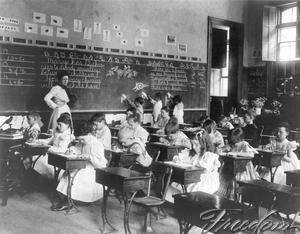
Before industrialization, education was primarily available to the upper class. However, industrialization led to reforms that made schooling more accessible, allowing more children to attend school. Cities also began creating more spaces for leisure, such as public parks, to improve quality of life and provide recreational areas for the growing number of urban residents. Spectating sports and watching theater were popularized in this period as a way for people to relax when not working.

Industrialization dramatically reshaped society from what it was for thousands of years. It moved work from rural farms to factories and crowding cities, which led to urban improvements like sewage systems and public safety services. Technological advances made goods more affordable and increased production efficiency. These changes also triggered labor movements demanding better wages, working conditions, and protections against child labor. Family structures also changed as people transitioned to more urbanized lifestyles. Access to also education expanded, establishing foundations that continue to influence modern life.
Despite the many challenges, this transformative period ultimately brought humanity forward, shaping the world as we know it today. Imagine being born in the 1800s and witnessing society’s shift from an agriculture to industry, seeing new technology that once seemed inconceivable. Also imagine the transition from you to your children and grandchildren. In one or two generations, they would go from a world where space travel was literal mythology to watching the first planes being invented, to seeing humans land on the moon in the 1960s through television screens. Though much suffering occurred during these times like wars, economic crises, and social revolutions, humanity still made it through with the technologies and developments rooted in industrialization. It is really a powerful testament to human ingenuity and our drive to explore the unknown and achieve the unachievable.
Britannica, T. Editors of Encyclopaedia (2024, October 4). industrialization. Encyclopedia Britannica. https://www.britannica.com/topic/industrialization
Amaker, T., Barber, C., Benson, A., Beyerl, Z., Bogdan, K., Crocker, L., Doppelheuer, E., Gonzalez, H., Heal, S., Strong, R., O’Dell, A., O’Haren, D., Pavlish, J., Prus, L., Reese, E., Sasnett, M., Shadinger, J., Smith, A., Todd, S., … Hernandez, A. (2020, July 29). The Industrial Revolution and Sts. Science Technology and Society a Student Led Exploration. https://opentextbooks.clemson.edu/sciencetechnologyandsociety/chapter/the-industrial-revolution-and-sts/
Heimler, S. (2023, January 13). The SOCIAL Effects of Industrialization [AP Euro, Unit 6 Topic 4]. YouTube. https://www.youtube.com/watch?v=Y5f5x8wvjeQ
Encyclopedia.com. (n.d.). The Social Impact of the Industrial Revolution. Encyclopedia.com. https://encyclopedia.com/science/encyclopedias-almanacs-transcripts-and-maps/social-impact-industrial-revolution
Meera. (2017, March 31). Industrial revolution: Causes, impact and Overview. Sociology Group. https://www.sociologygroup.com/industrial-revolution/
Editors, History. com. (2009, October 29). Industrial revolution: Definition, inventions & dates ‑ history. https://www.history.com/topics/industrial-revolution/industrial-revolution
Bilstein, R. E. , Boyne, . Walter James and Crouch, . Tom D. (2024, October 30). history of flight. Encyclopedia Britannica. https://www.britannica.com/technology/history-of-flight
Logsdon, J. M. (2024, November 4). space exploration. Encyclopedia Britannica. https://www.britannica.com/science/space-exploration